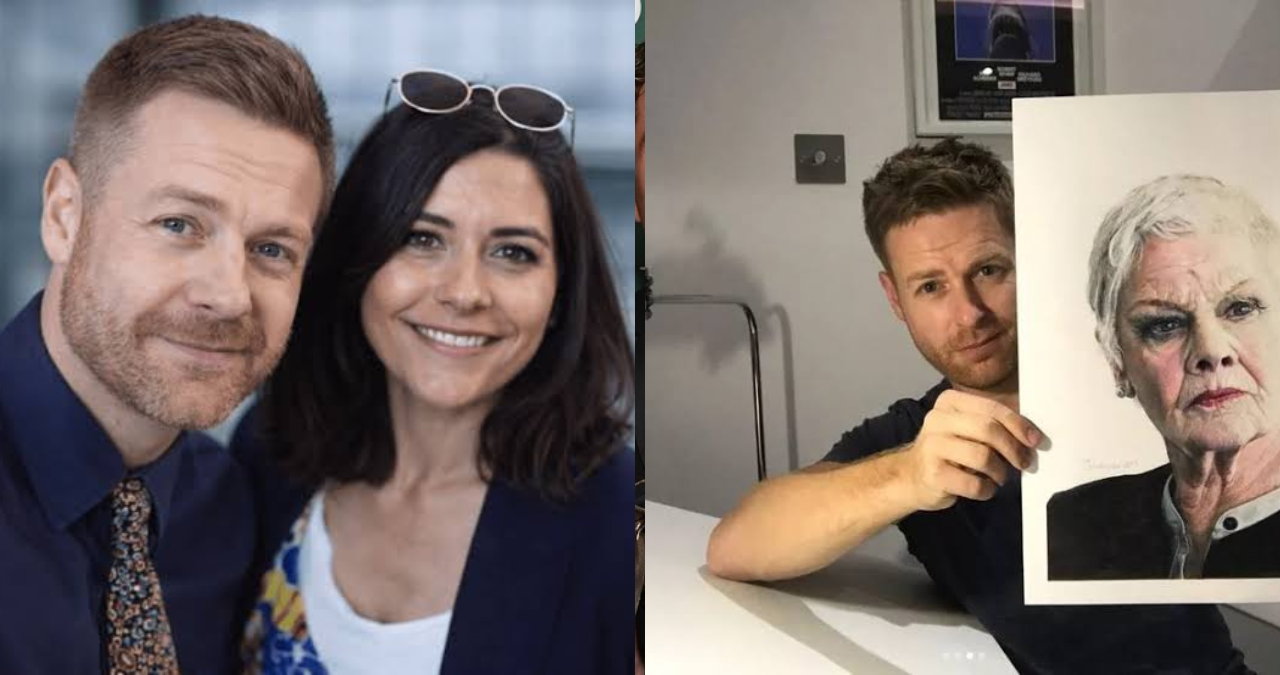
Mark Dunford is a British artist whose work has quietly but powerfully shaped contemporary approaches to observational painting. Known for his deep engagement with colour, space, and visual perception, Dunford has spent four decades refining an artistic language that reflects not just what things look like, but how they are seen. His paintings — whether of landscapes, interiors, still lifes, or the human figure — offer viewers a way of thinking through sight rather than merely looking at an image.
Across his career, Dunford has built a reputation for both technical excellence and thoughtful creativity. He is also a dedicated teacher whose influence extends to generations of painters and art students. This article explores his life, artistic philosophy, methods, exhibitions, and legacy, providing a comprehensive portrait of an artist committed to clarity of vision and depth of experience.
Early Life and Artistic Beginnings
Mark Dunford was born in the southwest of England in the mid‑1960s, into a context shaped by both natural beauty and a rich cultural heritage. From an early age he demonstrated an affinity for drawing and an attentive curiosity about the world around him. Growing up in a region known for its landscapes and light — qualities that have long attracted painters — Dunford’s early interests in visual thinking were nurtured by his surroundings.
Unlike many young artists drawn immediately to abstract or conceptual practices, Dunford gravitated toward observational work. He was not content with surface likeness; even in his earliest sketches, what mattered most was an understanding of how forms relate to each other in space and how the eye negotiates complex visual information.
His teenage and early student work reflected a serious commitment to craftsmanship, draughtsmanship, and careful study — qualities that would carry through his later artistic life.
Education and Formation
Dunford’s formal training began at a reputable regional art college where foundational skills in drawing, painting, and visual analysis were established. There he immersed himself in the traditional disciplines of observational painting — figure drawing, still life, landscape, and composition.
His work at this early stage showed both technical promise and a thoughtful approach to representation. Unlike many of his peers who pursued trendy or surface effects, Dunford was drawn to painters who engaged deeply with visual structure — the way shapes, colours, and light interact on a surface and in space.
He later continued his training at a leading art institution in London, where he was exposed to a broader array of artistic approaches — from historical masters to modern practices. Here, he refined both his technical foundations and his conceptual approach to painting. Crucially, he encountered teachers and peers who encouraged investigation, patience, and critical thinking as part of studio practice.
It was in this environment that Dunford’s artistic philosophy began to crystallize: that seeing is not a passive act, but an active negotiation between the eye, the mind, and the subject. This philosophy would shape his work and his teaching for decades to come.
Artistic Philosophy: Observation as Inquiry
At the heart of Mark Dunford’s art is a core belief: painting is a recovery of experience through perceptual engagement. This means his work does not seek merely to copy appearances, but to interrogate the act of seeing itself.
Seeing as Active Engagement
Dunford’s practice insists that seeing is not passive reception. Instead, the artist must look again, and again, responding to subtle shifts of light, colour, and relation. His paintings unfold slowly, with careful attention to the way shapes and colours shift over time.
This approach contrasts sharply with styles that prioritize quick impressions or immediate emotional impact. For Dunford, clarity emerges from sustained observation — a belief that connects his work to the great tradition of painters who considered the world as a field of visual data to be thoughtfully held in mind.
Drawing as Thought
Dunford’s work often begins with drawing — not just as a preparatory step, but as a way of thinking. In his studio, drawing functions as a cognitive process, allowing him to understand proportion, scale, and spatial relationships before paint ever touches canvas.
These preparatory lines are not hidden beneath a surface; they live in the painting as evidence of how it was perceived. This transparency of process gives his paintings an immediacy that transcends the purely representational.
Colour as Structure
Colour in Dunford’s paintings is never decorative. Instead, it acts as a structural force. Colours create relational tension, define form, and anchor space. His palettes, while subtle, are precise — informed by what he sees rather than what he expects to find.
Colour becomes a mode of understanding rather than a finishing veneer, and this gives his paintings their unique visual coherence.
Technique and Method
Dunford’s technique is deliberate and reflective. He does not impose pre‑selected motifs or preferred brushmarks onto his work; instead, he allows the act of seeing to guide his hand.
Building from Life
A key component of his method is painting from life — situating himself before a subject, whether it is a landscape, interior, or array of objects, and engaging with it over extended periods.
This practice enables him to capture not just momentary light conditions, but the rhythm of visual experience: how colours shift over time, how perception breathes with changing light, and how spatial relationships reveal themselves through continued looking.
Layering and Revision
Unlike painters who execute with a single pass, Dunford’s paintings grow through layers, adjustments, and revision. Each layer responds to the one before it, constructing a depth that is both physical and perceptual.
This layering mirrors the way perception itself occurs — not as a single act, but as an accumulation of insights, corrections, and refinements.
Themes and Subjects
Mark Dunford’s paintings explore a variety of subject matter, yet they all share a common focus on visual experience.
Landscapes
In his landscapes, distance is not merely measured; it is felt. Dunford’s skies, fields, and horizons are constructed out of delicate colour balances that evoke atmosphere rather than flat representation. His landscapes are records of how place feels in the moment — how light animates surface and how space unfolds before the viewer.
Interiors and Still Lifes
His interior scenes and still lifes are equally attentive to spatial tension. Objects within a room are not isolated forms, but elements in a network of relationships defined by light, volume, and proximity. This engagement turns everyday objects into subjects of concentrated inquiry.
Portraiture and Figurative Work
When Dunford engages with the human figure, he treats it with the same patient analysis that defines all of his work. The figure is not merely depicted, but understood within its spatial and perceptual context — revealing the sitter’s presence as well as their form in space.
Major Works and Notable Exhibitions
Over his career, Mark Dunford has exhibited widely in galleries and institutions known for supporting serious painting and rigorous art practice. His exhibitions have spanned respected venues in the UK and internationally, reflecting the deep critical appreciation for his work.
Though his paintings never rely on spectacle or trend, their clarity and intensity have earned him inclusion in group shows devoted to contemporary realism and perceptual art as well as solo exhibitions that focus on the evolution of his practice.
Collectors who respond to his work often cite its visual intelligence — the way his paintings reward thoughtful and sustained engagement rather than superficial observation.
Educational Work and Influence on Artists
In addition to his own paintings, Dunford is a dedicated art educator. He has taught drawing and painting extensively for more than thirty years, in both institutional and workshop settings.
Principles in Teaching
Dunford’s teaching method mirrors his artistic philosophy: drawing and seeing are intertwined. He encourages students not to focus on surface imitation, but to understand the underlying structures that give rise to appearances. This method trains students to see more deeply and to paint with confidence — not based on preconceived visual clichés, but grounded in perceptual truth.
Studying with him is often described as transformational by his students, who appreciate his patient attention to individual perceptual development and his insistence that technique emerge from thoughtful seeing rather than rote procedure.
Critical Reception and Artistic Legacy
Critics and fellow artists often describe Dunford’s work as thoughtful, rigorous, and perceptually acute. His paintings do not shout for attention — they invite it. In a visual culture saturated with images that bombard the eye, Dunford’s art stands as a reminder of the power of slow seeing and careful consideration.
His paintings reward not just visual inspection, but intellectual engagement. They structure visual experience in ways that allow the viewer to reconsider familiar forms and spaces as something alive and new.
As a teacher, Dunford’s influence extends into the studios of those who have learned from him, further amplifying his impact on contemporary painting practice.
Legacy and Continuing Relevance
Mark Dunford’s contribution to art goes beyond his paintings alone. He represents a lineage of painters who believe that looking deeply is itself a form of knowledge.
In an era where digital images can be consumed in an instant, Dunford’s work insists that visual understanding is a slow, thoughtful act. His paintings — built through observation, reflection, and refinement — demonstrate that the practice of painting remains a vital form of human inquiry.
His legacy will be measured not just by the works he creates, but by the ways in which he has trained artists to look, think, and see with discipline and wonder.
FAQ
1. Who is Mark Dunford?
Mark Dunford is a British artist known for his observational painting, emphasis on visual experience, and deep engagement with drawing and colour.
2. What defines his artistic philosophy?
He believes painting is rooted in active observation, where seeing is done thoughtfully through time, integrating drawing, colour relations, and space.
3. What subjects does he paint?
His work includes landscapes, interiors, still lifes, and figures — all treated with careful visual analysis and a commitment to perceptual truth.
4. Is he also an art teacher?
Yes. Dunford has taught drawing and painting for decades, influencing many artists with his methods focused on seeing and making.
5. Why is his work important?
His paintings invite deeper engagement with perception and visual experience, standing out in contemporary art for their intellectual depth and sensory clarity.
Conclusion
Mark Dunford’s art and teaching challenge us to reconsider what it means to see. In his work, the canvas becomes a space where perception is dissected and reconstructed, where colour and form serve as tools for understanding, and where the act of painting becomes an investigation into experience itself.
His career — marked by thoughtful exploration, artistic discipline, and educational influence — stands as a testament to the power of observational painting in a world of rapid images. Through his paintings and his teaching, Dunford invites us to slow down, look closely, and rediscover the richness that lies in the simple act of seeing.
Read More: Nick Timothy: Political Strategist and Conservative MP